
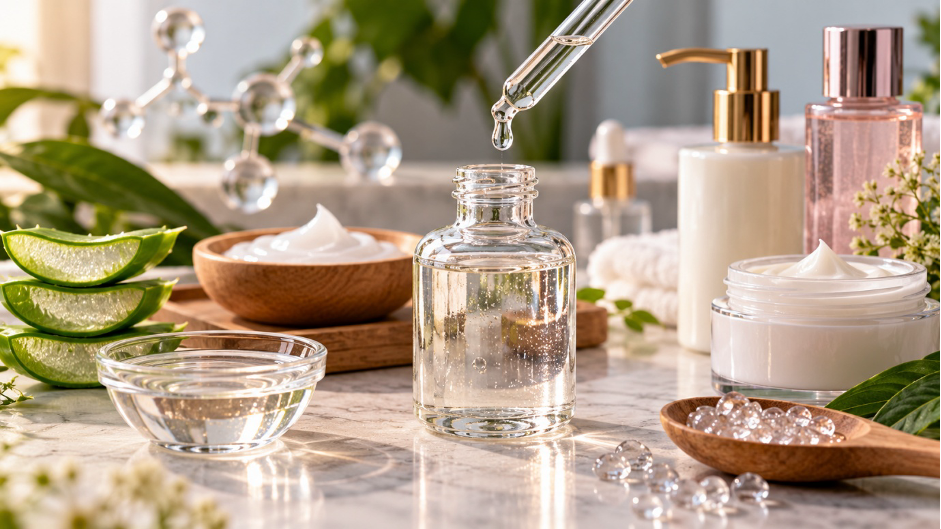
Flip over almost any moisturiser and read the ingredient list. Glycerin is probably in there, often close to the top. Shoppers have become careful label readers, and they want hydration, skin comfort, safety and believable sustainability credentials, all in one jar. Formulators are expected to deliver that at a price people will actually pay.
Glycerin is one of the quiet workhorses in that balancing act. It shows up across cosmetics and personal care, so when its market shifts, the effects travel from the supplier’s tank to the brand’s pricing sheet. Following the Glycerin Price Trend isn’t just a back-office habit. It can shape which products get launched, reformulated, or quietly delayed.
Glycerin, also called glycerol, is a clear, syrupy liquid with a mildly sweet taste. It can come from plant oils or animal fats, and it can also be made synthetically. In cosmetics, it’s mainly valued as a humectant, which means it attracts water and helps hold it in the upper layers of the skin.
That’s why glycerin in skincare turns up in such a wide range of formats:
It does a bit more than hydrate, too. It can improve how a product spreads and feels on the skin, and it helps keep creams and lotions from drying out in the pot. It’s a supporting ingredient rather than a treatment, though, and nobody should expect it to fix a skin condition.
Why does the cost of a humble humectant move at all? Largely because of where it comes from. A lot of glycerin is generated as a byproduct of biodiesel production, and it’s also a coproduct in oleochemical processing. So developments in biofuel markets can change how much crude glycerin is available, even though the beauty industry has nothing to do with them.
Several other factors sit alongside that:
None of these works alone. A tight feedstock market and a freight disruption can land in the same quarter, and then buyers feel both at once.
For a manufacturer, a price change in a raw material doesn’t hit every product equally. A glycerin-rich body lotion or a bar of glycerin soap carries far more exposure than a serum that uses a small amount. The share of glycerin in the formula, and the cost structure of the finished product, decide how much it hurts.
Still, the effects can reach several parts of the business. Formulation costs shift, procurement teams rethink supplier selection, and production planning gets harder when prices are jumpy. Brands may adjust product pricing, look at ingredient substitution, hold more or less inventory, or reopen contract negotiations. Smaller brands, with less buying power and less storage, usually have fewer options than large manufacturers.
Formulators rarely lean on one ingredient alone. Glycerin often sits next to other humectants, emollients that soften the skin, and occlusives that slow water loss. Add botanical ingredients, actives, preservatives, and texture modifiers, and the formula becomes a negotiation.
Too much glycerin can leave a product feeling tacky, for instance, so the amount is tuned against everything else in the mix. Performance, sensory feel, stability, consumer expectations, and cost all pull in different directions. And a formula that suits one person’s skin won’t necessarily suit another’s, so it’s a mistake to treat glycerin as right for everyone.
Consumer interest in hydration and skin-barrier care has been visible for years. People talk about gentle formulations, minimalist routines and shorter ingredient lists, and they increasingly ask what’s in a product and why. Brands that can explain their ingredients clearly tend to earn more trust.
That kind of demand favours functional, recognisable ingredients, and glycerin fits the description. It’s familiar, it has an easy story to tell, and it works in both simple and complex formulas. But a popular ingredient is also one that many brands compete to buy, which makes sourcing a bigger deal.
Glycerin sits inside the wider bio-based chemical ecosystem. Because it’s tied to biodiesel and oleochemical value chains, it’s often described as a good example of byproduct utilisation, where material that might otherwise be waste finds a use. That idea appeals to brands building circular, lower-impact stories.
Here’s the catch. Not every glycerin source has the same environmental profile. The feedstock matters, whether it’s rapeseed, soy, palm, or something else, and so do the processing and transport behind it. Palm-derived material, for example, raises its own sourcing questions. Sustainability claims hold up better when they’re judged across the whole supply chain, with traceability and transparency behind them.
There’s no single fix for ingredient volatility, but some habits help:
Whatever a brand does, quality should stay the priority. Cutting corners on grade or purity to save a little on glycerin can cost far more through failed batches, stability problems or unhappy customers. Cheaper is only better if the product still performs.
Buying decisions made on gut feeling tend to age badly. Beauty manufacturers that look at the raw-material market before committing to a purchase are usually in a better position to negotiate, time orders and avoid being caught off guard. Keeping an eye on the Glycerin Price Trend alongside supply-demand conditions, regional differences, feedstock developments and wider market drivers can help procurement teams decide when to buy, how much to commit and whether a second source is worth lining up.
None of this replaces technical judgement from formulators. It simply gives the people who sign the purchase orders a clearer picture to work from, and that tends to make conversations between R&D, purchasing and finance a lot less painful.
It helps to separate what’s already established from what’s still developing. Demand for hydration-focused skincare is well established, as is the interest in bio-based ingredients and clearer supply-chain information. Those aren’t guesses.
What’s less certain is how fast things will move. More sophisticated formulation technology could help brands get the same results with less of a given ingredient. Ingredient traceability and data-driven procurement may become more common, especially for companies under pressure to prove their sourcing claims. Greater focus on formulation efficiency seems likely too, but how far it goes will depend on costs, regulation and what shoppers actually reward.
Glycerin sits where cosmetic science, consumer demand, raw-material sourcing and manufacturing meet. It’s simple enough to be taken for granted, yet its supply is tied to energy, biofuels, feedstocks and logistics in ways most shoppers never see.
Understanding those links helps brands balance performance, affordability, supply security, and sustainability without trading one off against the rest. As the beauty industry keeps changing, smarter ingredient sourcing will matter more, and the brands that treat it as part of product development, not just purchasing, will probably be the ones best prepared.